



The global marketplace AliExpress has transitioned from simple age warnings to a comprehensive user identification system. Access to «sensitive» product categories is now strictly granted only after verifying age through an independent verification service.
While no official statements have been released by the platform, shoppers worldwide are already encountering these new restrictions. The AliShop editorial team has analyzed the mechanics of this update to explain how the system works and what users should expect.
The End of the «Just Click to Confirm» Era
Previously, accessing restricted content on AliExpress only required clicking the «I am over 18» button. It was little more than a formality that imposed no real verification and could easily be bypassed by virtually anyone.
Now, however, the rules have changed. Clicking that button no longer grants access directly – instead, it triggers a mandatory Age Verification process. The system immediately checks whether verified age information is linked to your account.
If no verification is found, AliExpress completely blocks access to the product. Users are not only unable to place an order, but also lose access to the product page itself, including specifications, details, and pricing – the listing remains locked until the identity verification process is successfully completed.
Restricted Categories Subject to Verification
The KYC (Know Your Customer) system is now triggered when users attempt to interact with certain product categories that were previously accessible without identity verification:
- Dangerous Items and Tools: Kitchen knives, folding outdoor knives, metal shurikens, and other products featuring sharp blades or edged components.
- Adult Products: Verification has become mandatory across the entire adult catalog – including sex toys, electronic adult devices, specialized lingerie, condoms, and sexual wellness accessories.
The list of restricted categories is likely to expand over time, especially for products that are subject to legal age restrictions in different countries and jurisdictions.
Identification Mechanics: How Verification Works Now
The verification process on AliExpress has become sequential and mandatory. Simply closing the window will no longer work – the system guides the user through several technical stages:
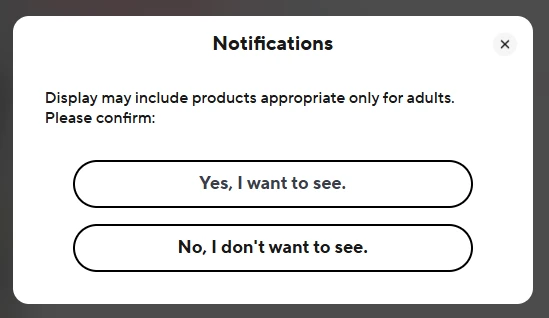
- Stage 1: Preliminary Confirmation. When trying to open a product, the system displays a notification: «Display may include products appropriate only for adults. Please confirm». If you click «Yes, I want to see», you proceed further. If you click «No» – you are simply redirected to the homepage.
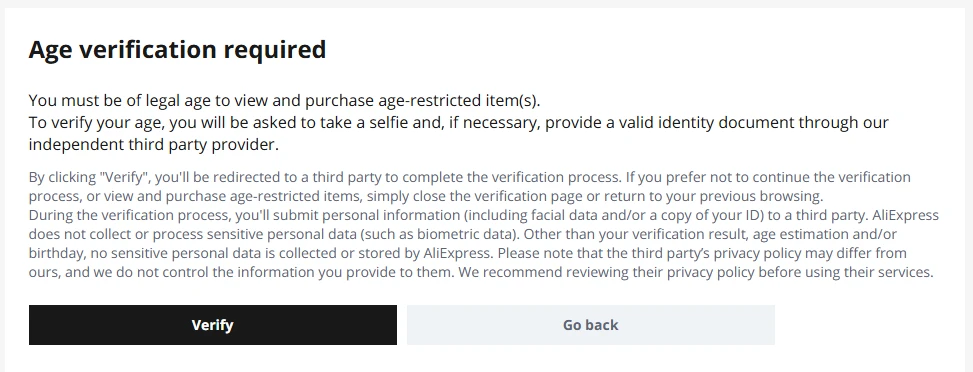
- Stage 2: Choosing a Method. On the «Age verification required» page, the platform explains that to confirm your age, you need to either take a selfie or upload a document. Verification is carried out not by AliExpress itself, but by an independent service provider.
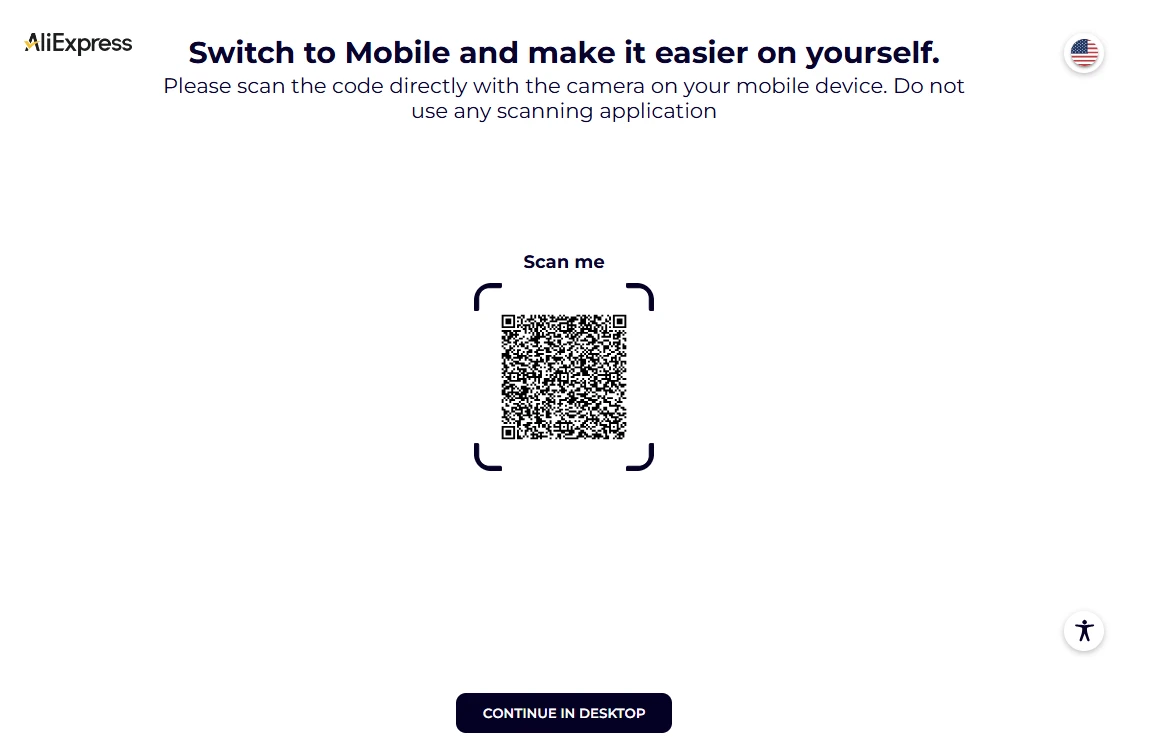
- Stage 3: Selfie Identification. This is the main method. AliExpress offers to scan a QR code and continue in the mobile app. This is needed to use the smartphone camera for accurate real-time facial analysis. The AI algorithm instantly estimates your age based on your facial features.
- Stage 4: Document Verification. If the AI could not clearly determine your age from the photo (for example, due to poor lighting), the system will ask you to upload an ID card, international passport, or driver’s license through a secure gateway.
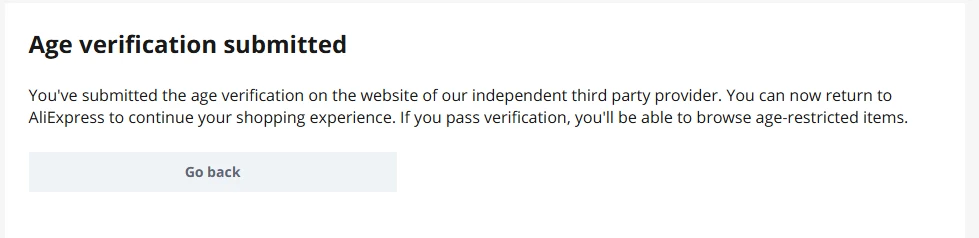
- Stage 5: Waiting for the Result. After submitting the data, the status «Age verification submitted» appears. Access to purchases will open only after the independent operator confirms your identity.


Stricter control over «sensitive» categories is certainly the right step to protect children and teenagers, improving the safety of the entire platform.
However, for adult shoppers, this creates obvious inconvenience: instead of placing an order instantly, they now have to spend time on verification and wait for confirmation, which may take from a few minutes to several days.
Reliability and Privacy
The platform officially states that AliExpress does not directly collect, process, or store users’ biometric data. The validation process is handled by an independent third-party service provider, while the marketplace receives only the final verification result and the account holder’s age data. This approach is designed to comply with international security and personal data protection standards.
Expert Analysis and Conclusions
The introduction of strict KYC controls signals AliExpress’s transformation from an «open marketplace» into a transparent global platform. For the market, this points to three major shifts:
- Reduced legal risks: Verification filters out anonymous users, reducing sellers’ liability for selling restricted products to minors.
- Trust through independence: The use of external KYC providers gives regulators greater transparency while reassuring customers that their biometric data is not stored directly within the marketplace’s own systems.
- Financial platform-level verification: AliExpress is effectively treating purchases of «sensitive» products similarly to financial operations, where access is granted only after an AI-powered system successfully verifies the user’s identity.
The new system makes anonymous purchases in adults categories effectively impossible. It is a radical but necessary step for the platform to continue operating legally on a global scale while complying with increasingly strict regulatory requirements.