
Two years have passed since the debut of the first Samsung Galaxy Ring in 2024, but it is only now that the market is seeing a true explosion in “finger-worn” tech. What used to be an expensive toy for tech enthusiasts has become a mainstream accessory in 2026, finally mastering week-long battery life and accurate sleep tracking.
However, with the original Samsung ring still priced at $350-400, many are turning to AliExpress. It is a real “Wild West” out there: dozens of models from Colmi, Nova, and Jakcom offer identical designs at a tenth of the price – starting from $30.
Can a gadget priced like a restaurant dinner truly replace a premium device? I spent two weeks with a top-tier Chinese contender on my finger, comparing its data with a medical pulse oximeter. I’m ready to show you where manufacturers from the Middle Kingdom have made a breakthrough and where they’ve simply cut corners. In this review, we’ll find out if these budget rings are worth your money or if you should keep saving for the original.
- Technology in Millimeters: What’s Inside?
- The Build: Titanium or “Marketing” Steel?
- Real-World Test: Heart Rate, Sleep, and SpO2 with COLMI R10
- Heart Rate Accuracy: Can You Trust the Numbers?
- Sleep Tracking: Better Than a Watch?
- Oxygen Levels (SpO2)
- Battery Life and the “Magic” Case
- The NFC Myth: Why the COLMI R10 Won’t Replace Your Bank Card
- Sizing Specifics: Why Standard Measurements Don’t Work for Smart Rings
- The Internal Lens Factor
- Finger Anatomy: Knuckle vs. Base
- Why the Choice of Finger Matters
- ali-shop.net Verdict: Practicality Over Marketing
- Quick Summary: Benefits vs. Limitations
Technology in Millimeters: What’s Inside?
When you hold a gadget weighing just 4-5 grams, it’s hard to believe that a Bluetooth antenna, battery, accelerometer, and optical heart rate sensor are all packed inside. However, by 2026, microminiaturization has reached its peak, and brands like Colmi and Nova have mastered the art of replicating the architecture of premium devices.
The Build: Titanium or “Marketing” Steel?
While the original Samsung Ring is crafted from aerospace-grade titanium, $30 alternatives typically feature 316L surgical steel or aluminum alloy, with an inner layer made of hypoallergenic epoxy resin.
- The Feel: To the touch, the budget versions are almost indistinguishable from the original, though they are slightly heavier.
- Thickness: This is the dealbreaker. The Galaxy Ring is about 2.3 mm thick, whereas AliExpress clones are often “bulkier”—ranging from 2.8 to 3.2 mm. This might seem like a small detail until you clench your fist: that extra millimeter between your fingers is definitely noticeable.
Real-World Test: Heart Rate, Sleep, and SpO2 with COLMI R10
When discussing budget alternatives, the COLMI R10 is often the first name that comes up. This ring became a hit because it was the first in its segment to feature a proper charging case and the Vcare VC30F sensor. I wore it for two weeks side-by-side with an Apple Watch, and here are the results.
Heart Rate Accuracy: Can You Trust the Numbers?
In a resting state, the COLMI R10 shows impressive accuracy. When the Apple Watch reported 68 BPM, the ring usually stayed within the 67-69 range.
- The Nuance: During high-intensity running or CrossFit, the sensor sometimes “loses” the rhythm. This happens because sweat causes the ring to shift slightly on the finger.
- Expert Tip: If you’re buying this for yoga, hiking, or stress management, the power of the Realtek 8762 chip is more than sufficient.
Sleep Tracking: Better Than a Watch?
This is where the R10 truly shines. Weighing only 4.4 grams, you barely feel it at night.
- Sleep Phases: The QRing app provides detailed charts: Deep Sleep, Light Sleep, and REM. Compared to professional trackers, the R10 sometimes adds an extra 15-20 minutes to “time to fall asleep” if you’re just lying still with a book.
- HRV (Heart Rate Variability): The ring tracks your stress index, helping you understand if your body has recovered from yesterday’s workout.
Oxygen Levels (SpO2)
The sensor runs in auto-mode even at night, which is critical for spotting signs of apnea (breathing pauses). In my tests, the ring accurately captured drops below 95%, performing identically to much more expensive devices.
Battery Life and the “Magic” Case
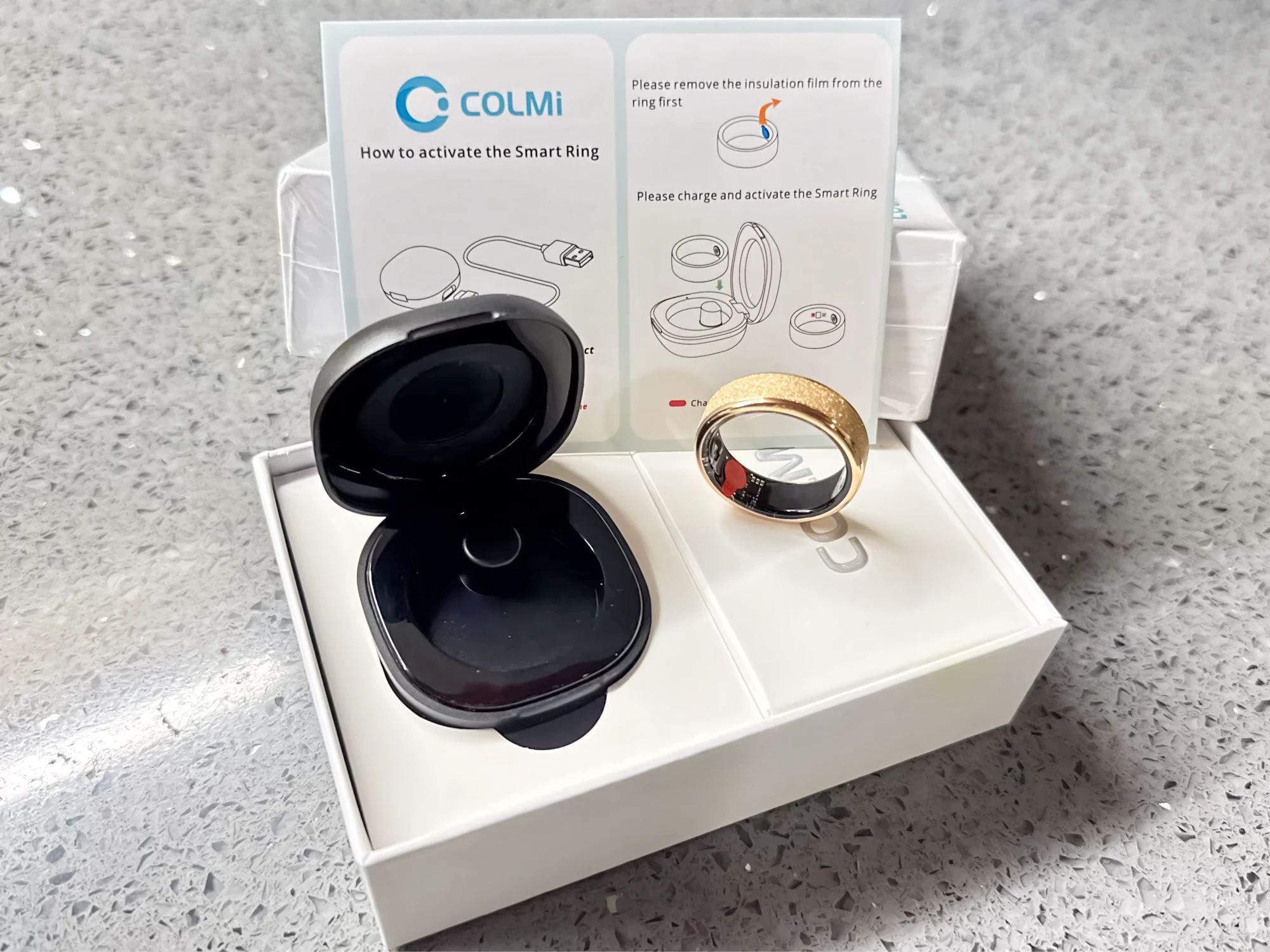
The standout feature of the COLMI R10 is its 200 mAh charging case.
- The ring itself lasts about 3-5 days on a single charge (depending on heart rate frequency).
- The case can fully recharge the ring up to 13 times.
The Bottom Line: You can go on a month-long vacation without ever needing a Type-C cable. This level of convenience is still missing in many premium competitors. This isn’t just a “Chinese toy” anymore; it’s a mature tech product.
The NFC Myth: Why the COLMI R10 Won’t Replace Your Bank Card
There is a persistent illusion surrounding AliExpress smart rings, often fueled by the sellers themselves: the promise of contactless payments. Let’s set the record straight: the COLMI R10 does not have an NFC module at all. This was a deliberate choice by the manufacturer. Omitting the extra chip allowed the ring to be lighter (just 4.4g) and significantly more affordable than its competitors.
But even if it did have NFC, you still wouldn’t be able to use it for payments at a standard grocery store terminal.
- What is the technical limitation? To work with Google Pay or Apple Pay, a device must feature a certified chip with a Secure Element and a license from banking systems. No budget brand on AliExpress in 2026 is investing in these costly requirements.
- Then what is NFC for in other rings? If you see more expensive alternatives with NFC (like the Jakcom brand), remember: that module is only for copying “simple” tags—such as intercom keys, electronic office passes, or sharing a link to your digital business card.
The Verdict: If your primary goal is “hand-wave” payments, the COLMI R10 is not for you. It is strictly a health and fitness tracker, and it earns its keep by monitoring your body, not your financial transactions.
Sizing Specifics: Why Standard Measurements Don’t Work for Smart Rings
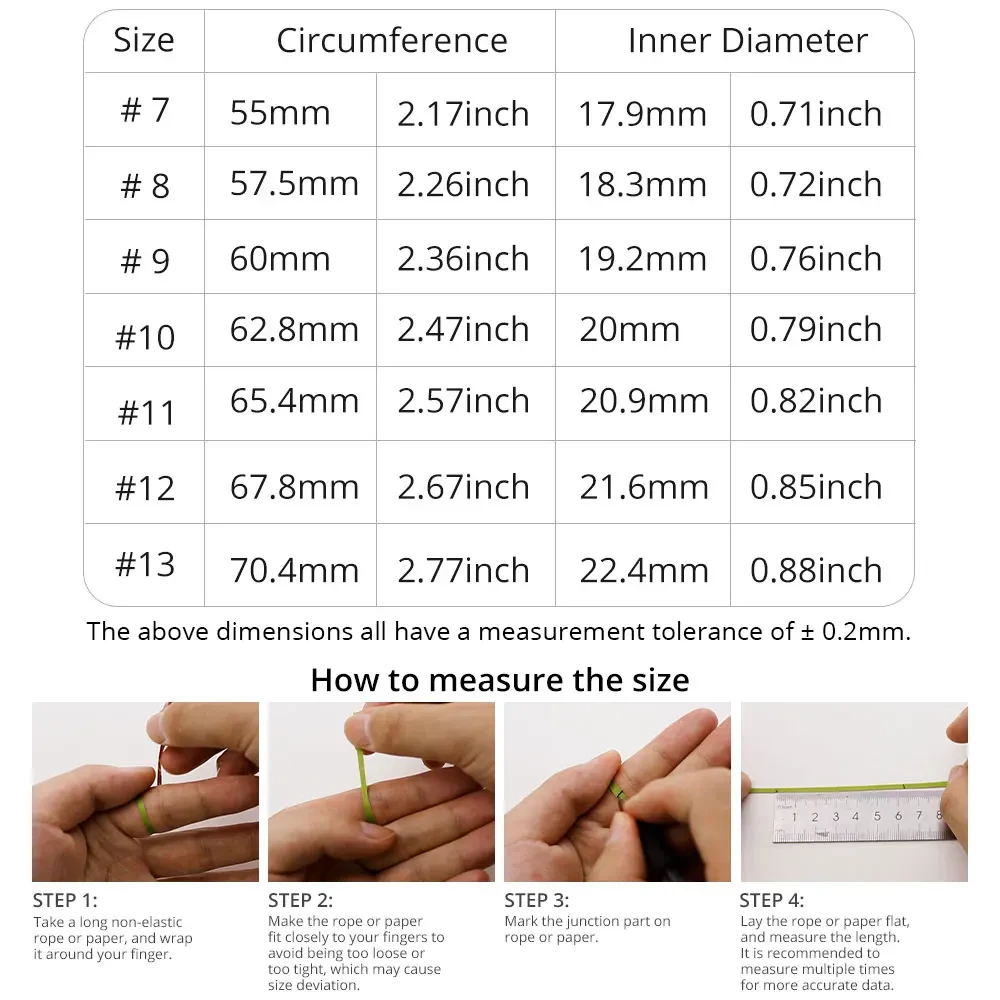
Unlike a watch, where an extra millimeter is easily adjusted by the strap, a smart ring requires a perfect fit. If it’s too loose, the sensors will record “noise” instead of your heart rate; if it’s too tight, physical discomfort will force you to take it off within an hour.
The COLMI R10 uses the US sizing scale, but you cannot simply rely on your jewelry experience due to several design features.
The Internal Lens Factor
The main difference between the COLMI R10 and a traditional wedding band is the three convex zones on the inner surface. These are the optical sensor lenses, which must sit snugly against your skin.
- The Nuance: These bumps effectively reduce the internal diameter by about 0.2-0.3 mm.
- The Solution: If your measurement is on the borderline (e.g., 61.5 mm), it is wiser to choose the larger size (#10). The sensor bumps will fill the extra space, preventing the ring from spinning.
Finger Anatomy: Knuckle vs. Base
A smart ring is a rigid, inflexible structure. The most common mistake is measuring only the base of the finger.
- If your knuckle is significantly wider than the base of your finger, the ring simply won’t pass over it.
- Always measure the widest part of your finger. The ring should pass over the knuckle with slight resistance—this ensures it won’t fall off during hand washing but won’t pinch the phalanx either.
Why the Choice of Finger Matters
Monitoring accuracy depends directly on the capillary network. For Vcare sensors like the ones in the R10, the index and middle fingers are the top priorities. Anatomically, they provide more stable blood flow than the ring finger, where SpO2 readings can be 3-5% lower due to tissue density.
Expert Tip: Always take your measurements in the evening. Natural daytime swelling is a critical factor. A morning measurement almost always leads to buying a device that is too tight and becomes unbearable by the end of the workday.
ali-shop.net Verdict: Practicality Over Marketing
As of 2026, the COLMI R10 remains one of the most balanced devices in its segment. It doesn’t try to mimic premium brands in every detail; instead, it serves as a laser-focused tool for monitoring essential health metrics.
Who will benefit most from this gadget:
- Sleep-tracking enthusiasts. For many, wearing a bulky smartwatch to bed is uncomfortable. This ring solves that problem, providing consistent data on sleep phases and Heart Rate Variability (HRV) in the background.
- Fans of classic watches. If you prefer traditional mechanical watches on your wrist but still want physical activity analytics, the COLMI R10 acts as a discreet digital companion.
- Testing the waters. Buying this model is a rational way to see if the smart ring form factor fits your lifestyle before investing heavily in premium alternatives.
Objective Limitations: It’s important to understand that you cannot get full flagship functionality at this price point. The COLMI R10 lacks an NFC module for payments, and the sensor accuracy during high-intensity cardio workouts isn’t on par with chest-strap heart rate monitors. Additionally, the rigid design demands a flawless size fit, as any error will critically impact measurement quality.
Conclusion: The COLMI R10 is a pragmatic choice. The device fully justifies its cost, provided you clearly understand its purpose: 24/7 body monitoring without unnecessary bells and whistles. If your priorities are battery life, compactness, and core sleep analytics, this gadget is one of the best deals on AliExpress.
Quick Summary: Benefits vs. Limitations
| ✅ Pros (Advantages) | ❌ Cons (Disadvantages) |
|---|---|
| Unbeatable Price: High-end smart ring experience for a fraction of the cost ($35 vs $400). | No NFC: Cannot be used for contactless payments (Google/Apple Pay). |
| Innovative Charging Case: Portable power bank allows for a month of use without a wall outlet. | Bulky Design: Thicker than the original Galaxy Ring (up to 3.2 mm), which may feel tight when clenching a fist. |
| Superior Comfort for Sleep: Lightweight 4.4g build is much more comfortable than a smartwatch for 24/7 tracking. | Workout Accuracy: Sensors may lose tracking during high-intensity cardio or heavy sweating. |
| Solid Core Tech: Reliable Vcare VC30F sensor for steady resting heart rate and SpO2 monitoring. | Sizing Sensitivity: Rigid structure requires precise measurement; the internal lenses effectively reduce the fit. |